
More than your feet.
Before we talk about nerves and treatments, I want to talk about what you are living with. Burning that keeps you awake. Tingling that will not settle down. Numbness that makes you watch every step. You may be tired of explaining symptoms other people cannot see.
When ordinary things become hard
A walk with family, a trip to the store, or getting up at night can start to feel different. You may worry about falling or losing your independence. Neuropathy can affect sensation and balance, so those concerns deserve attention. [10]
You deserve to be heard
If you have diabetes, you may also worry about sores or injuries you cannot feel. [4,10] I want you to bring those concerns to your evaluation. Tell me what has changed, what you have already tried, and what you most want to get back to doing.
There is a reason to look for answers
Neuropathy has different causes, and the outlook is different for each person. Some underlying causes can be treated, and care can help manage symptoms and support daily function. [1,5] Let’s find out what applies to you and which next steps make sense.
My goal is to help you understand your options and work toward more of the life you miss.
Dr. Christopher T. Cordima
Nerves need a supply line
Nerves are living tissue. Blood vessels deliver oxygen and nutrients that help them function. Think of those vessels as delivery roads: the tissue depends on what reaches it. In diabetes, high blood sugar can damage both nerves and their small blood vessels. [3]
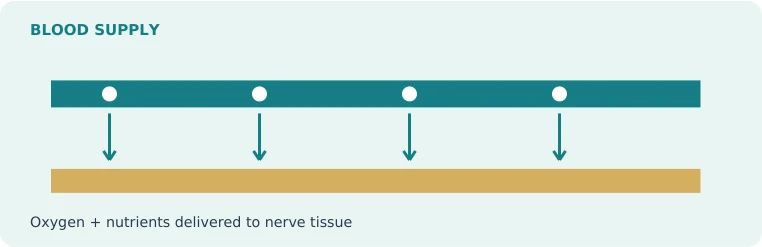
BLOOD SUPPLY
Oxygen + nutrients delivered to nerve tissue
But neuropathy is not always a circulation problem. Other causes include certain chemotherapy drugs, vitamin deficiencies, nerve injuries, and other illnesses. Sometimes a cause remains unidentified; this is called idiopathic neuropathy. [2]
Our evaluation includes the Toronto Clinical Neuropathy Score (TCNS): a structured review of symptoms, reflexes, and sensation. This helps document neuropathy signs and track clinical changes over time. The score was validated in diabetic neuropathy; it does not, by itself, identify the cause or prove nerve regrowth. [12]
Two questions worth asking: What do my examination findings show? What care fits my symptoms and goals?
Diagram is a simplified explanation of normal nutrient delivery, not a diagnostic image or a demonstration of treatment results.
Why getting answers matters
Numbness can reduce the warning you normally get from a blister or injury. Neuropathy can also affect balance. With diabetes, wounds and infections can become serious, particularly when blood flow is poor. These risks deserve attention; they are not everyone's future. [3,4]
There is no single timeline for neuropathy. The outlook depends on the cause and extent of damage. Some causes can be treated; others require ongoing management. Waiting gives you fewer answers about which situation applies to you. [1,5]
A simple daily foot check [4]
LOOK: Check tops, soles, and between toes. Use a mirror if needed.
PROTECT: Wear well-fitting shoes and socks; check inside shoes.
AVOID HEAT: Do not use heating pads or hot-water bottles on numb feet.
Do not wait for a routine appointment. Contact a medical clinician promptly for a nonhealing wound or a foot that becomes red, warm, or swollen. Rapidly developing weakness, or trouble breathing or swallowing, requires urgent medical assessment. [4,11]
A sensible next step is an evaluation, not assuming the worst. Bring your concerns while also staying connected with your medical care team.
Your goals matter.
Perhaps you want to sleep without burning feet waking you. Maybe you want to enjoy a walk without thinking about every step. These are the kinds of goals I want to understand before we discuss a plan.
Comfort matters
Finding relief matters when symptoms have worn you down. Medicines, selected topical treatments, and other approaches may help manage nerve pain. Your health history and current medicines help guide safe choices. [5,10]
The cause matters, too
Pain relief is one part of the picture. An evaluation also looks for causes that may need specific care, such as a vitamin B12 deficiency. We want to understand what is happening, rather than simply add another product to your routine. [5,10]
Your daily life guides the conversation
Tell us about sleep, walking, balance, and the activities you have started avoiding. We use that information alongside your examination to discuss appropriate care and review changes over time.
Bring your questions
What is each treatment meant to help? What can I do at home? How will we review progress? You deserve clear answers in everyday language.
Keep your medical team informed about your care. Discuss medicine changes with your prescriber, and review supplements before adding them. [5,9,10]
Several tools. One individual evaluation.
Your care plan starts with your examination, health history, and the activities you want back. Each part of the plan has a purpose: helping you feel more comfortable and move through daily life with greater confidence.
Electrical stimulation / neuromodulation
Electrical neuromodulation uses targeted signals to influence nerve activity. Our device combines nerve and muscle stimulation. We use it with the goals of calming painful nerve signaling, encouraging muscle activity, and improving comfort. The settings are selected around your examination findings and tolerance. [6,14]
Red and infrared light / cold laser
Our protocol may include LED foot wraps and/or cold laser. These therapies use selected wavelengths of light. We use them with the goal of easing discomfort and making daily activity more comfortable. Clinical research in diabetic neuropathy has reported improvements in pain and sensation with certain laser treatments. [7]
Vibration plate
Vibration creates repeated mechanical movement that engages the muscles. We use it with the goals of supporting blood flow, balance, and comfortable movement. Research in people with diabetic neuropathy has reported improvements in pain and balance, while a separate study found increased skin blood flow immediately after treatment. [8,13]
Support that carries into everyday life.
What happens between visits matters, too. Practical guidance helps you take an active role in your care and build habits that fit your daily routine.
Nutrition and supplementation
Good nutrition supports overall health and normal nerve function. We review your food choices, health history, medicines, and current supplements. When appropriate, we discuss targeted nutritional support and coordinate with your medical team about possible deficiencies. Recommendations focus on your individual needs, suitable doses, and compatibility with your medicines. [5,9,10]
Home care and progress reviews
We help you turn your care plan into practical steps: checking your feet, choosing appropriate activity, and working toward goals that matter to you. These may include sleeping more comfortably, enjoying a walk, or feeling steadier during daily tasks. Follow-up visits give us a chance to review your progress and adjust recommendations. [4,10]
Progress should connect to your life. Tell us what you want to do more comfortably. We will use your goals, symptoms, and examination findings to guide the conversation at each review.
Answers before you begin
Can you help if I have had neuropathy for years?
An evaluation helps determine whether our approach fits. We consider your history, symptoms, daily function, and examination findings.
Will my insurance cover this?
Some plans cover chiropractic adjustments to the extremities. Medicare does not. [15] Light therapy, custom orthotics, and supplements are self-pay in our office and will not be billed to insurance. We explain fees before care begins.
Is this guaranteed to work?
Nothing in healthcare is guaranteed. For a suitable candidate, following an individualized program offers an opportunity for meaningful relief and better daily function. We set clear goals and review your progress along the way.
How many visits will I need, and what does it cost?
We discuss your proposed schedule, fees, and progress reviews after your evaluation.
What can I do between visits?
Follow your home-care guidance, check your feet daily, and wear suitable shoes. Ask which exercises fit your needs. [4,10]
What if I have already tried other treatments?
Tell us what helped and what did not. This helps us discuss your next step, including further medical evaluation when appropriate. [5,10]
Let’s find your next step.
A plan, not a magic bullet
There is no single answer for every person with neuropathy. We begin with your symptoms, health history, examination, and goals. Then we discuss care that fits your needs and practical steps you can take between visits.
Can you be helped?
That is the question I want to help you answer. The Toronto Clinical Neuropathy Score helps us document symptoms, reflexes, and sensation. We consider those findings alongside your history and daily function when discussing whether our approach is appropriate. [12]
You deserve an honest conversation
If care here looks appropriate, I will explain what we recommend, why, and how we will review progress. If further testing or another type of care makes more sense, I will tell you. Let us know about any concerns that could make following a plan difficult.
Meaningful progress is personal
More comfortable nights. An easier walk. Greater confidence during everyday tasks. We will discuss goals that matter to you and look at changes together. Your starting point and response help guide the next steps. No treatment outcome is guaranteed.
Schedule a Neuropathy Evaluation
Call (617) 629-2600
About Dr. Cordima

Dr. Christopher T. Cordima, DC, BCN Practicing since 1988.
Board Certified in Chronic Intractable Pain & Neuropathy.
Dr. Cordima graduated from Palmer Chiropractic College in 1987 and received his chiropractic license in November 1988. He comes from a family with a legacy in chiropractic care and is proud to carry that tradition forward.
His approach starts with listening: what hurts, what you have tried, and what you want to get back to doing. He is dedicated to compassionate, honest care and helping you understand whether a natural, nonsurgical approach fits your needs.
Outside the office, he enjoys time with his loving partner, Linda, and their family, hiking New England trails with Benny, exploring local coffee shops and restaurants, and cooking together.
Let's talk about getting you back to the life you miss.
Cordima Chiropractic Center Call (617) 629-2600 to schedule an appointment.
Visit somervillechiropractor.com
References
Numbers in the text refer to the sources below. Study results apply to the tested populations, devices, and settings. Office-care descriptions explain our intended goals.
1. National Health Service. Peripheral neuropathy. Read source
2. National Health Service. Peripheral neuropathy: causes. Read source
3. National Institute of Diabetes and Digestive and Kidney Diseases (NIDDK). What is diabetic neuropathy? Read source
4. NIDDK. Diabetes & foot problems. Read source
5. National Health Service. Peripheral neuropathy: treatment. Read source
6. International Neuromodulation Society. Neuromodulation defined; transcutaneous electrical nerve stimulation (TENS). Read source
7. Anju M, et al. A single blinded randomized controlled trial assessing the effect of photobiomodulation therapy on neuron specific biomarkers in type II diabetes mellitus patients with peripheral neuropathy. Diabetes Res Clin Pract. 2025;222:112087. doi:10.1016/j.diabres.2025.112087. Read source
8. Jamal A, et al. Whole body vibration showed beneficial effect on pain, balance measures and quality of life in painful diabetic peripheral neuropathy: a randomized controlled trial. J Diabetes Metab Disord. 2020;19:61-69. doi:10.1007/s40200-019-00476-1. Read source
9. NIH Office of Dietary Supplements. Vitamin B6: fact sheet for health professionals. Read source
10. NIDDK. Peripheral neuropathy. Read source
11. National Health Service. Guillain-Barré syndrome. Read source
12. Bril V, Perkins BA. Validation of the Toronto Clinical Scoring System for diabetic polyneuropathy. Diabetes Care. 2002;25(11):2048-2052. doi:10.2337/diacare.25.11.2048. Read source
13. Johnson PK, et al. Effect of whole body vibration on skin blood flow and nitric oxide production. J Diabetes Sci Technol. 2014;8(4):889-894. doi:10.1177/1932296814536289. Read source
14. ReBuilder Medical. Technical information, models 300 and 2407. Manufacturer specifications for nerve- and muscle-stimulation functions; not independent proof of clinical benefit. Read source
15. Centers for Medicare & Medicaid Services. Chiropractic services: coverage limited to manual spinal manipulation. Read source
Keep a copy of this guide
Save the PDF to read later or bring it to your appointment.
Download PDFFor an overview of care available at our office, explore our services. Your evaluation guides which options may be appropriate.