NON-SURGICAL HEEL PAIN CARE · SOMERVILLE, MAWhen your first steps hurt, let’s find your next step.
Getting out of bed shouldn’t make you brace for heel pain. Neither should walking the dog, standing in the kitchen, or keeping up with your family.
Let’s understand your foot pain—and whether our non-surgical approach may help you work toward more comfortable steps.
Start with a conversation about your concerns and next steps.
YOUR STORY MATTERSLet’s talk about your heel pain.
Are you planning your day around how long you can stand or how far you can walk? I want to hear what this pain is taking from your life—and what you want to get back to.
Serving Somerville and welcoming patients from Greater Boston and the North Shore.
DOES THIS SOUND FAMILIAR?Every step shouldn’t be a negotiation.
Patients often tell Dr. Cordima: “The first steps out of bed in the morning are terrible.” “It feels like a stone bruise in my heel.”
- Pain under your heel
- Sharp or aching first steps in the morning
- Discomfort when getting up after sitting
- Heel pain after activity
- Cutting walks short because your foot hurts
- Wondering if the pain will return each day
The plantar fascia is a band of tissue that supports the arch of your foot. Plantar fasciitis affects this tissue, but not every painful heel has the same cause. Have you been given a diagnosis, or are you still looking for answers? Either way, let’s start by listening.
OUR APPROACH & YOUR FIRST VISITMore comfortable steps. A plan that fits your life.
Maybe you want to finish a work shift, enjoy a morning walk, or stand long enough to cook dinner. Your goals matter. The first visit helps us understand your concerns and whether care here may be right for you.
01Understand your foot and your day
Dr. Cordima checks tenderness along the bottom of your foot and heel, assesses foot and ankle movement, and watches how you walk and stand. He considers calf tightness, your arches, and footwear, and also checks your knee, hip, and low back to understand the movement pattern around your foot concerns.
02Review your findings and options
Get a clear explanation of your findings, whether non-surgical care here may be appropriate, and the recommendations and costs before you decide. If you need another evaluation, we’ll explain why.
03Build around the steps you miss
Your plan starts with what matters to you. We’ll discuss realistic goals, how to follow your progress, and practical changes that may fit your routine.
Bring any available imaging reports and details of previous care. An evaluation does not commit you to a treatment program. Not every patient is a candidate, and results vary.
YOUR FIRST STEPLet’s talk about getting you back to the life you miss.
Tell us what’s been bothering you, ask your questions, and get a clear understanding of your options.
Dr. Cordima will listen, evaluate your concerns, and explain whether care here may help—or recommend another next step.
Learn before your visit.
FREE PATIENT GUIDE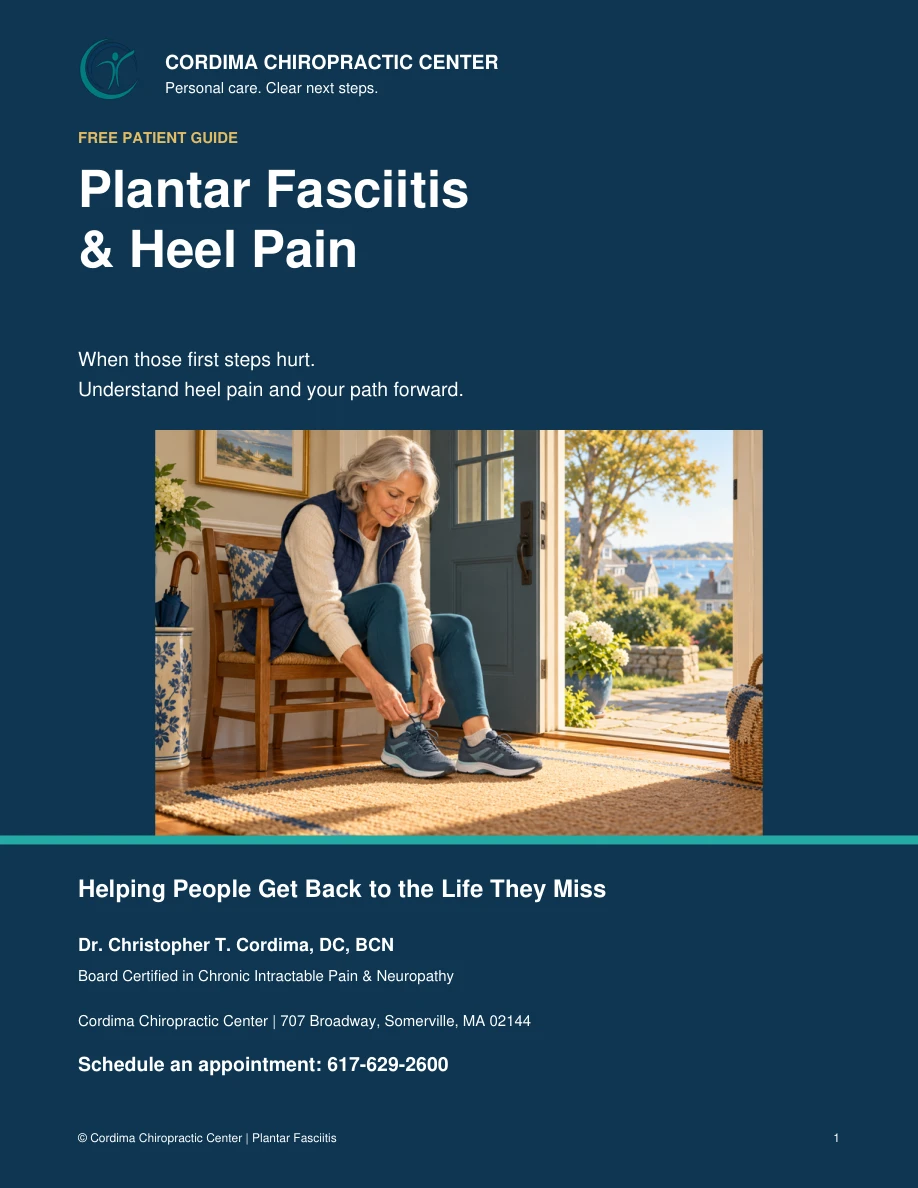
Plantar Fasciitis & Heel Pain
When those first steps hurt. Understand heel pain and your path forward.
Read the Free Guide
LET’S TALK ABOUT YOUR FEETWhat is heel pain keeping you from doing?
Find a starting point for your foot evaluation.
Three quick questions about your concerns, daily activities, and previous care. Choose one main concern, then select all that apply on the next two questions.
A starting point for a conversation, not a diagnosis. Is all heel pain plantar fasciitis?
No. Plantar fasciitis is a common cause of pain under the heel, but other problems can feel similar. Your history and examination help Dr. Cordima understand whether this is the right starting point or another evaluation is needed.
Why do my first steps hurt so much?
Pain with the first steps after sleep or sitting is a common pattern with plantar fasciitis. It may ease as you move, then return after time on your feet. Tell us when it hurts and what changes it.
What if shoes, inserts, or exercises have not helped?
Bring that history with you. What helped, what did not, and how long you tried it are useful parts of your evaluation. You do not have to start the conversation from scratch.
How long will it take to feel better?
We want you to notice meaningful progress, but we cannot promise a fixed timeline. Your findings, how long symptoms have been present, and your response to care guide the plan. Dr. Cordima will explain what to watch for and when to reassess.
Will I need surgery?
Many people improve with non-surgical care. An evaluation helps determine whether our approach may fit your needs. If your findings call for another type of care, Dr. Cordima will explain the next step.
How do I book my first visit?
Use the Book a New Patient Visit button or call (617) 629-2600. Tell our team that heel or foot pain is bringing you in.
Why do you check my knee, hip, and low back when my heel hurts?
Those areas can influence how you walk and place weight through your foot. Dr. Cordima looks at your movement as a whole while assessing your heel, foot, ankle, calves, and footwear. His findings guide which next steps may be appropriate.
Patient education: AAOS: Plantar Fasciitis & Bone Spurs.
Let’s talk about the steps you want back.
Start with a personal evaluation at Cordima Chiropractic Center.
For an overview of care available at our office, explore our services. You can also learn about laser therapy. Your evaluation guides which options may be appropriate.